


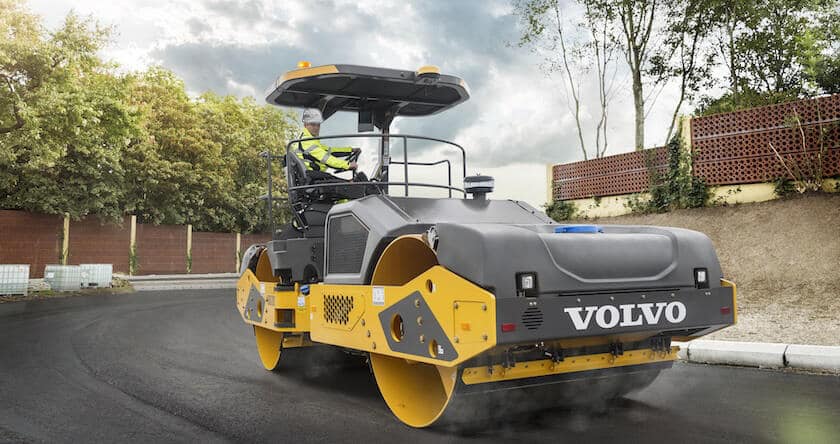
Mastering Compaction: 10 Fundamentals Every Contractor Should Know
Every great road, pad, or paved surface starts with the same thing: a strong, stable base. And that begins with proper compaction.
Compaction affects everything that comes after it, from how well asphalt holds up to how smooth the finished surface feels. When done right, it prevents settling, cracking, and premature failure. When done wrong, it can lead to costly rework.
Getting compaction right isn’t just about rolling until the ground looks level. It’s about understanding how vibration, force, and material behavior work together to create density. Whether you’re working on soil or asphalt, these fundamentals will help you and your crew work smarter, achieve target densities faster, and extend the life of every job.
We work with contractors every day who rely on Volvo soil and asphalt compactors to get it right. Here’s a breakdown of the 10 key principles that make all the difference on the jobsite.
1. Understanding Vibration in Compaction
Vibration is what makes a compactor truly effective. The rotating weight inside the drum generates energy that’s transferred into the ground or mat, tightening the material from the bottom up. For asphalt, this needs to happen while the mix is still at the right temperature to allow movement without damage. Compactors with higher dynamic force and optimized vibration frequency help crews hit density faster with fewer passes, and less fuel burned along the way.
2. Centrifugal Force and Density
The force produced by that rotating weight, called centrifugal force, determines how much energy is delivered to the ground. The right combination of force and amplitude helps you reach target density in fewer passes while minimizing machine wear and material displacement. Matching your compactor’s amplitude and force settings to the material type makes a noticeable difference in surface quality and speed.
3. Getting Impact Spacing Right
Every vibration cycle from the drum creates an impact on the surface. You want just the right number of impacts per foot, usually between 10 and 14, to create uniform compaction without damaging the mat. Drum size affects this spacing: larger drums need fewer impacts, smaller drums need more. Many Volvo compactors include onboard tools that help operators maintain optimal impact spacing at higher speeds for consistent results and smoother finishes.
4. Setting Amplitude for the Material
Amplitude is how far the drum moves vertically during vibration. Thick lifts or challenging materials call for higher amplitude; thin layers or soft materials need less. Choosing compactors that offer multiple amplitude settings gives operators more control to fine-tune performance for each layer and avoid over-compaction.
5. Frequency Matters
Frequency is the number of vibration cycles per minute. Higher frequencies allow faster rolling without compromising quality, but it’s all about finding the right balance. Matching frequency to lift thickness and material type helps achieve consistent density while maintaining productivity. Adjusting frequency during a job can also help crews adapt to changing material or temperature conditions.
6. The Advantage of Dual Amplitude
Dual amplitude systems allow operators to easily switch between high and low amplitudes for different job needs. That means one roller can handle both thick and thin lifts without equipment swaps or setup delays. On mixed job sites, dual-amplitude rollers save time and reduce unnecessary wear by adapting to changing compaction conditions.
7. Oscillation Drums: When You Need a Softer Touch
Oscillation uses a rocking motion instead of direct vertical impact to achieve compaction. It’s ideal for jobs where vibration could cause damage, like bridge decks, thin asphalt layers, or sensitive urban areas. This method delivers density with less vibration transfer, which makes it effective in noise-sensitive zones or when working near existing structures.
8. Why Auto-Reversing Eccentrics Improve Finish Quality
When a roller changes direction, some models automatically reverse the rotation of the eccentric weights inside the drum. This keeps the compaction force directed with the direction of travel, reducing the bow wave in front of the drum and helping maintain even compaction. Auto-reversing systems are especially useful for achieving smooth, uniform finishes on asphalt surfaces.
9. Drum Diameter and Compaction Performance
Drum diameter plays a big role in compaction quality. Larger drums provide more contact area, helping distribute force more evenly and reduce mat distortion or ripples. Smaller drums can limit performance, especially at higher amplitudes. When smoothness and surface quality matter most, larger-diameter drums deliver better results and greater efficiency.
10. Smart Compaction with Technology
Modern rollers often come equipped with Intelligent Compaction (IC) systems that use sensors and GPS to monitor pass coverage, density, and temperature in real time. Operators can see exactly where compaction is sufficient and where more work is needed. Volvo’s Compact Assist, powered by Co-Pilot, takes it a step further with real-time density mapping and temperature tracking, helping crews reduce rework, save time, and document performance with confidence.
Putting it All Together
Compaction is critical to project success, and when crews understand how vibration, force, and material behavior interact, they can achieve better results in less time and with fewer passes.
For expert support, equipment advice, and access to Volvo compaction equipment, Ascendum Machinery is your trusted partner. Our team understands your challenges and can recommend the tools and training you need to compact smarter.
Interested in learning more? Check out Volvo’s full article: https://www.volvoce.com/united-states/en-us/resources/blog/2025/10-fundamentals-of-compaction-in-construction-and-roadbuilding/